Creator Burnout: Why a Planned Week Off Will Not Kill Your Channel
There is a sentence I have heard from creators in every country I have worked with, in slightly different words each time: things are tight right now, so there is no point taking time off. I will enjoy life later, once the channel is stable.
It sounds responsible. Everybody has bills. Everybody has a target. Wanting to push a little harder before easing off is not a character flaw.
But after nine years of building faceless channels for English-speaking audiences, I have watched that sentence quietly eat entire years – mine included. So it is worth asking the uncomfortable version of the question: are you genuinely too stretched to stop, or have you built a life where stopping is no longer allowed?
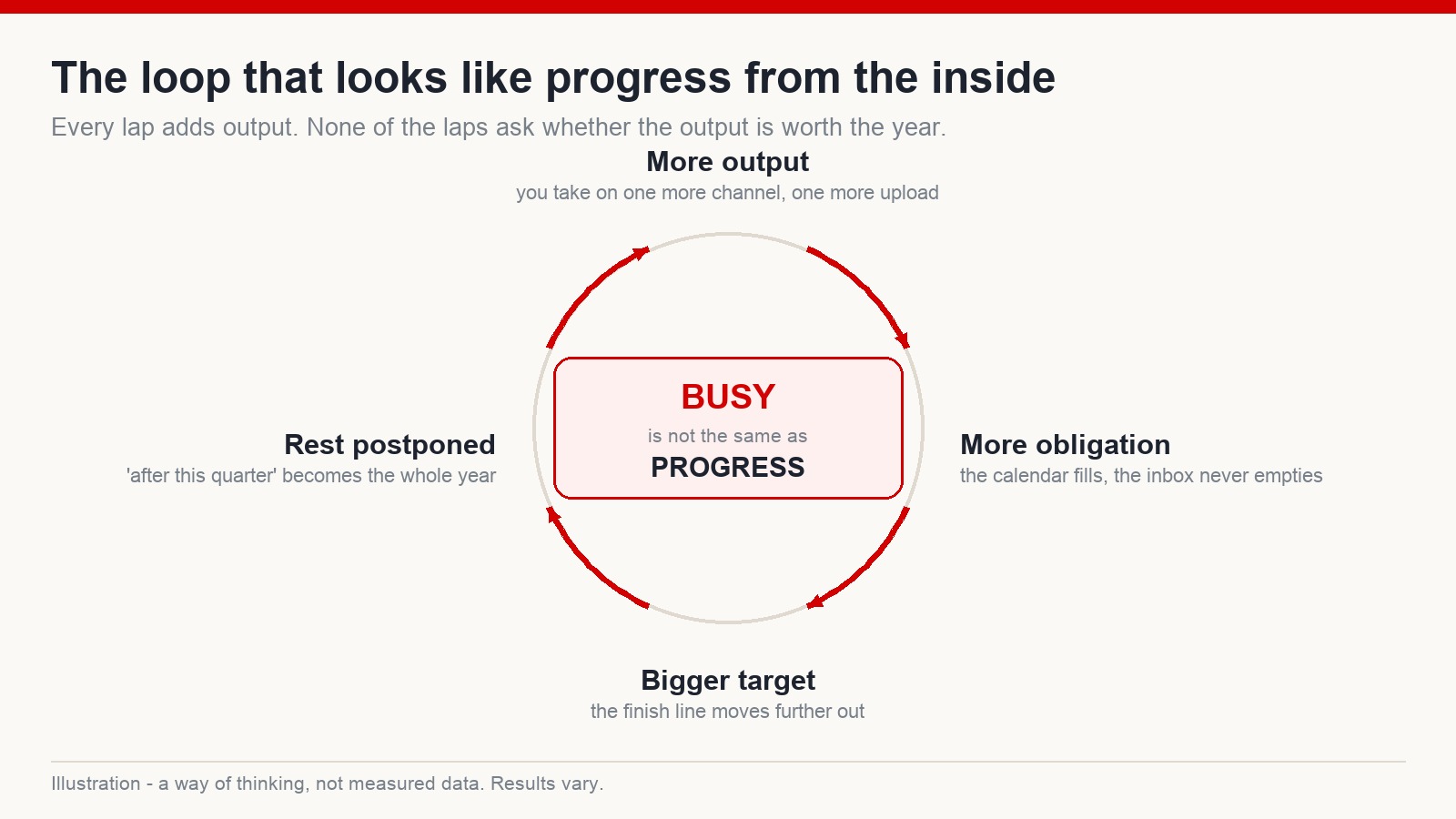
Busy is not the same as progress
I went through a stretch where I was proud of how busy I was. The calendar was full. Messages piled up faster than I could answer them. I thought about uploads before I opened my eyes and about the next batch as I fell asleep. From the inside, that felt exactly like momentum.
Then one evening I scrolled back through my phone looking for a photo to send someone, and there was nothing there. Months of screenshots. Analytics panels. Planning notes. Deadlines. Not one picture of a place, a person or an afternoon.
That is when the distinction landed. Being busy is a description of your calendar. Progress is a description of what changed. They overlap often enough that you can mistake one for the other for a very long time.
The loop tightens as things go better, not worse
Most people assume the pressure eases once a channel starts working. In my experience it does the opposite, and the mechanism is simple.
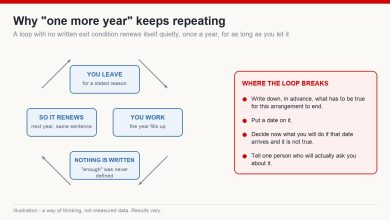
Early on you say you will take a break once there is some income. When some income arrives you say the opportunity is finally open, so you should push while it lasts. Now there is more to run, more to answer for, and a bigger number you are trying not to fall below. The break moves further out with every improvement.
The trap is not laziness. It is that each individual decision to postpone is completely reasonable. Only the pattern is unreasonable, and the pattern is invisible from inside any single week.
A real constraint and a shield look identical from outside
I want to be careful here, because real constraints exist. Plenty of creators are working a full-time job, supporting people, or genuinely counting every hour. Telling those people to relax is useless advice.
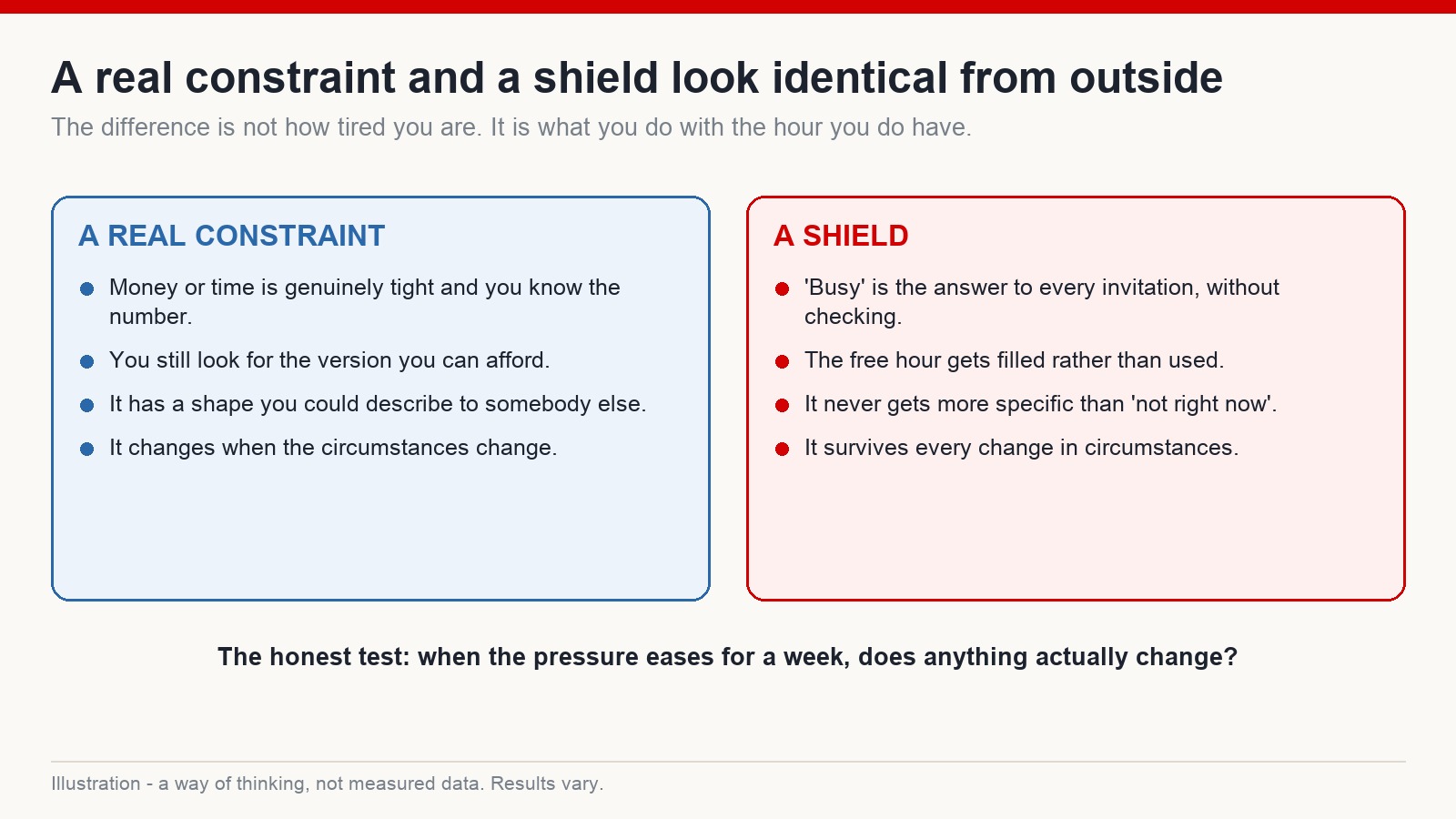
So here is the test I use on myself instead. A real constraint has a shape. You can name the number, describe the deadline, and say what would need to change for it to lift. It also adapts: when money is tight you look for the version you can afford rather than cancelling the whole category of living.
A shield has no shape. It is the same answer to every invitation, given before you have checked whether you are free. It never becomes more specific than not right now. And the giveaway is this: when the pressure genuinely eases for a week, nothing changes. The free hour gets filled, not used.
If that describes you, the problem was never the schedule. Somewhere along the way, work became a legitimate reason to decline everything else, including the parts of life you were supposedly working towards.
What actually happens to a channel when you stop for a week
The fear underneath all of this is usually specific: if I stop, the channel dies.
Here is the honest version, without either the panic or the reassurance. A recommendation system responds to how each individual video performs when it goes out – whether people click it, whether they stay, whether they watch something else afterwards. Your back catalogue does not switch off while you are away; older videos that were already finding viewers keep finding them.
What a break does cost you is rhythm. A quiet week is a quiet week. A quiet three months is something else: you lose the habit, your audience stops expecting you, and coming back is genuinely harder. I am not going to pretend those are the same thing.
So the practical answer is not never stop. It is stop deliberately, and build the buffer that makes stopping cheap. Batch two videos ahead so a week away leaves no gap. Keep a couple of evergreen pieces finished and unpublished for the week something goes wrong – and something always eventually goes wrong. A buffer is the difference between a rest and a disappearance.
Rest is an input to the work, not a reward for it
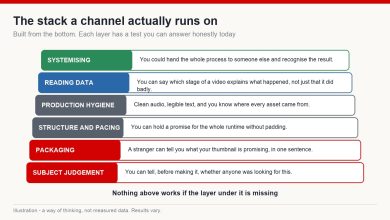
The other thing worth saying plainly: this job is a judgement job. Choosing which idea to make, deciding whether a thumbnail is actually clear, hearing that your opening thirty seconds is boring – all of that is judgement, and judgement degrades when you are fried in a way that raw effort does not.
The tired version of you can still edit. It cannot reliably tell whether the thing being edited is worth publishing. That is why exhausted months so often produce a lot of videos and almost no improvement.
Time off does not have to mean a trip
When people hear “take a break” they picture flights, hotels and a budget that does not exist. That is not what I am describing.
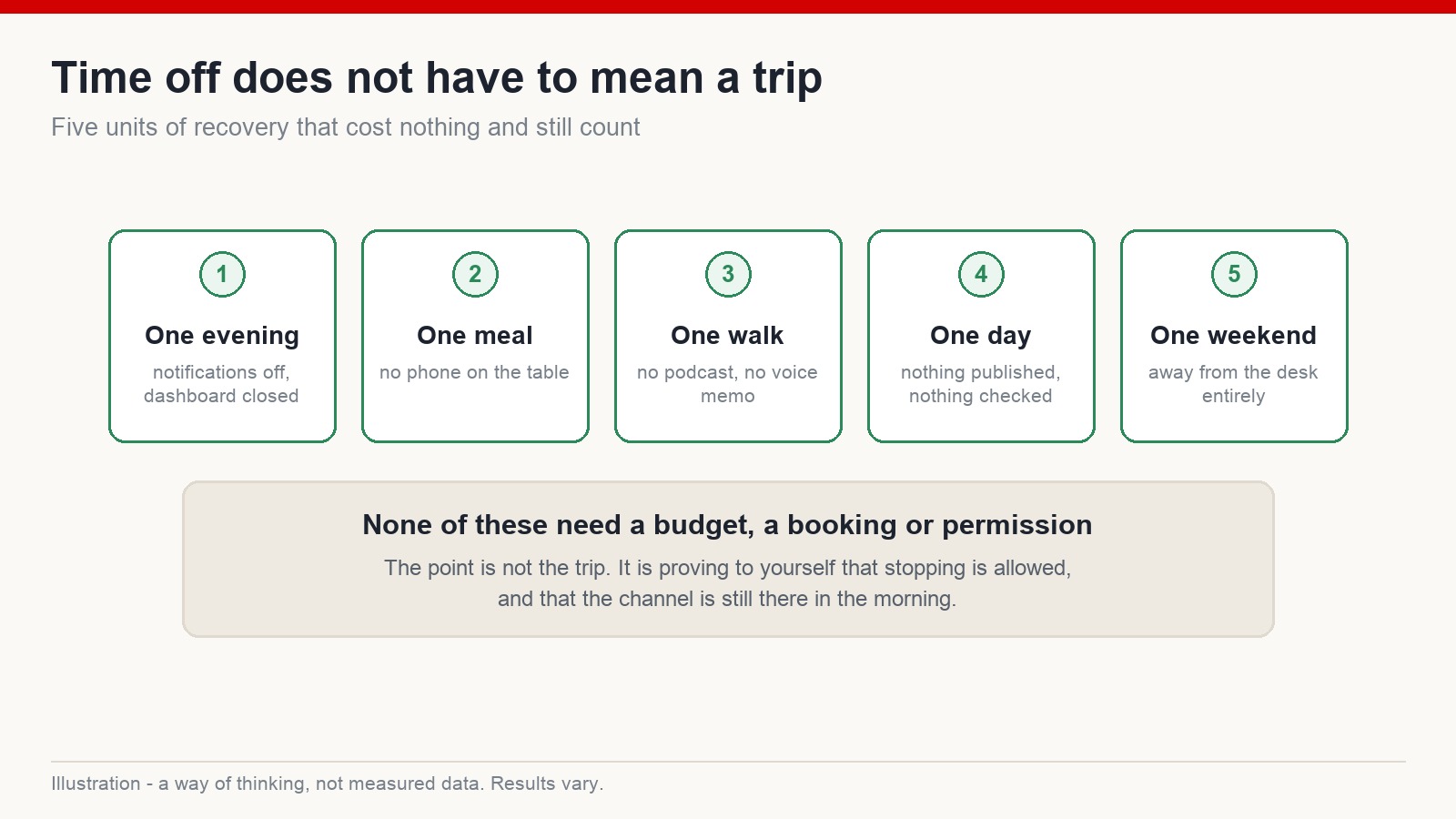
An evening with notifications off is a break. A meal where the phone stays face down is a break. A walk with no podcast and no voice memos is a break. A whole day where you publish nothing and check nothing is a break. None of these require a booking or anybody’s permission.
What they require is the harder thing: accepting that stopping is allowed, and finding out – which you can only find out by doing it – that the channel is still there in the morning.
Where this advice stops
I am not telling you to coast. Discipline still matters. Skill still matters. If your finances are genuinely under strain, an afternoon off does not fix that, and I am not going to suggest it does.
What I am saying is narrower. If you cannot point to a single hour in the last month that was yours, the constraint has probably stopped being financial and started being habitual. And that particular habit does not dissolve when the income grows. It scales with it, because there is always more to lose and always somebody moving faster.
Money is recoverable. A specific year of your life, with the people who were in it and the health you had at the time, is not. That is not a motivational line – it is just an asymmetry worth pricing correctly before you spend another year on the wrong side of it.
Frequently asked questions
Will taking a week off hurt my YouTube channel?
One planned week rarely does much on its own, especially if your back catalogue is still bringing in viewers. Long unplanned silences are the bigger risk, because they break your working habit and your audience’s expectation. Build a two-video buffer and a week off costs you nothing visible.
How do I know if I am burned out or just lazy?
Look at what happens with a genuinely free hour. Someone who needs recovery uses it and feels lighter afterwards. Someone caught in avoidance fills it with low-value busywork and feels worse. Also watch your judgement: when you can no longer tell whether your own work is good, that is a fatigue signal, not a discipline problem.
How do I take time off without losing publishing consistency?
Work ahead rather than working harder. Record two videos in one session so there is always one finished and unpublished. Treat that buffer as untouchable except for planned breaks and emergencies.
Is it wrong to spend money on experiences before the channel earns?
Only you can judge your finances, and nothing here is financial advice. But an experience does not have to be expensive to count. The point is not spending – it is being present somewhere that is not your desk.
Why do full-time creators seem more trapped than employed people?
Because the work has no edges. There is always another video, another test, another channel, another tool. When nothing external tells you to stop, you have to build the stopping rule yourself, or the job expands until it fills everything.
If you want a structured way to build an English-language channel that does not require you to be at the desk every waking hour, that is what we work on at mmoyoutube.com. No promises about results – only a clearer process than working until you break.